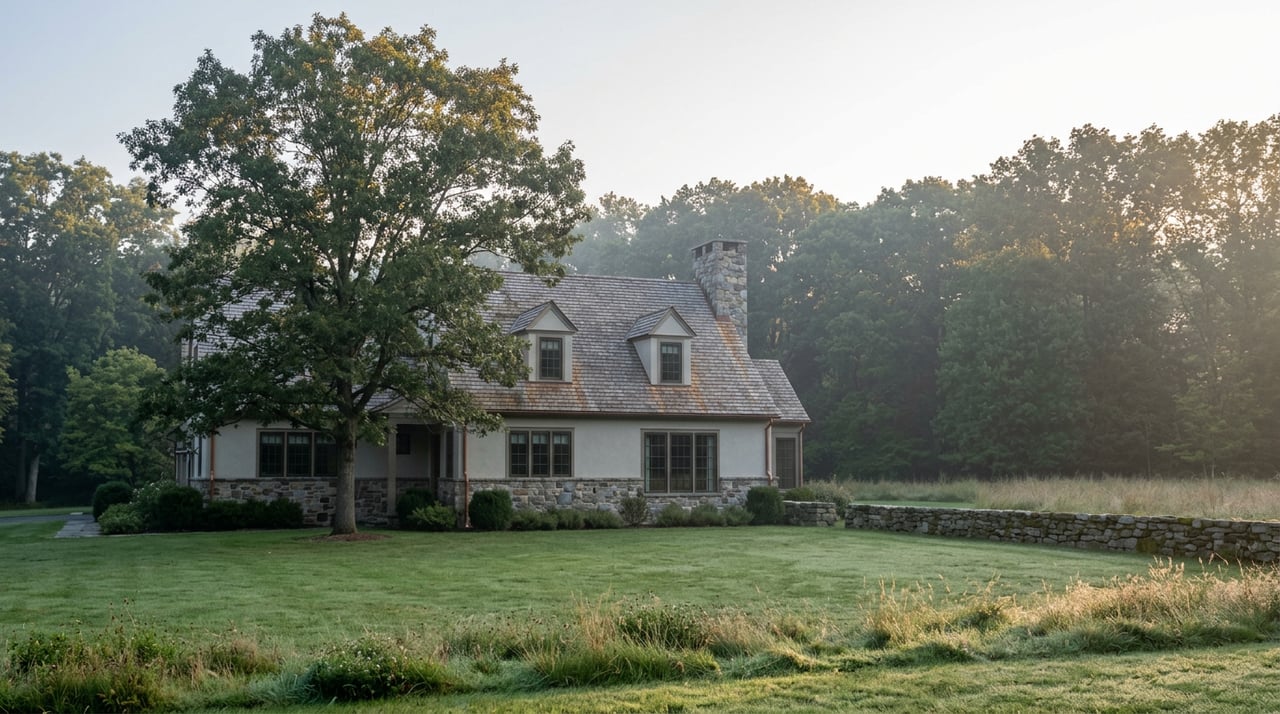
Colts Neck's Buildable-Acreage Gap: Why Two 3-Acre Lots Aren't the Same Purchase
Two listings come up on the same afternoon. Both sit on 3 acres in Colts Neck. Both show a colonial with a barn, a paddock, and room for a pool. On paper, they read like the same purchase with a different address. Then the septic and well permit paperwork comes back, and one property can support the addition the buyer already has drawn up, and the other cannot fit a shed without a variance.
Nothing about the deed changed between those two properties. What changed is how much of each lot the township actually counts.
Colts Neck's zoning code does not treat every square foot of a lot the same way. Before a parcel can be credited with supporting a house, a septic system, a well, and accessory structures, the code requires a fixed amount of land that is clear of environmental encumbrances. The ordinance covering residential design standards puts it plainly:
"Each lot shall contain 30,000 square feet free of wetlands and associated buffer areas; floodplains; conservation, open space, drainage and right-of-way easements, landscaping easements, drainage easements, special water resource protection areas and similar environmental features or encumbrances to ensure each lot can support an individual septic system, potable well, single family dwelling and accessory structures (in-ground pool, cabana, etc.)."
Read that again with a specific 3-acre lot in mind. A 3-acre parcel is roughly 130,000 square feet. If a stream corridor, a mapped wetland buffer, or a drainage easement runs through a third of it, the property can still be a legal building lot, but the land available to support the house, the septic field, and the well shrinks fast. Two neighbors with the same acreage on their tax bill can end up with very different amounts of usable ground once the environmental subtractions are applied.
This is the number a listing sheet does not print. Acreage is marketing language. Buildable area, once wetlands and easements are removed, is what actually determines whether the pool your family wants fits anywhere on the property.
The subtraction gets more specific depending on which residential district a lot sits in. Elsewhere in the code, a stricter footnote requires 85 percent, or 75,000 square feet, of a lot to be free of the same wetlands, floodplains, and easement categories, a higher bar than the base 30,000-square-foot standard. The township's A-7 Agricultural District is specifically exempted from that stricter footnote.
That is not a small distinction. A farm-zoned lot in A-7 and a similarly sized lot in a district still subject to the 85-percent footnote are playing by different rules for how much of the property has to be clean ground before it counts toward supporting a home and its systems. The township's broader residential districts (A-1 and A-2 in particular) are also written with the explicit purpose of protecting wooded areas, mature trees, and views, which is part of why Colts Neck reads as more forested and less developed than towns with similar median lot sizes nearby. That protection is written into the district's purpose language, not just its setback tables.
A buyer comparing a listing in one district against a listing in another cannot assume the acreage math works the same way. It doesn't.
Most buyers never think about buildable envelope math until they try to act on it. Colts Neck's Health Department is the body that witnesses soil profiles, reviews engineering plans, issues permits, and conducts inspections for every individual septic system in the township. That process runs through the township's construction office, and one of the required documents is a Health Water Well and Septic System form, which the homeowner or contractor signs to verify the exact location of the well and septic components on a survey before the township will approve permits for additions, decks, pools, sheds, or renovations.
In practice, this means the buildable-envelope question rarely gets asked at the listing stage. It gets asked when a new owner submits plans for the pool or the addition that sold them on the house, and the survey comes back showing the septic field and the well occupy more of the remaining buildable ground than expected. At that point the owner is not deciding whether to buy the house. They are deciding whether the project they planned around still fits.
The fix for this is timing. A buyer who asks for the septic and well location survey, and checks it against the district's environmental subtraction rules, before writing an offer contingent on those improvements is working with information the seller already has. A buyer who waits until after closing to submit renovation plans is finding out the hard way.
Two rules get confused constantly, and they are not the same rule.
New Jersey's Private Well Testing Act is a state law. When a property with a qualifying private well changes hands, the well water must be tested by a certified lab for a defined list of contaminants, and both buyer and seller must receive and review the results before the closing of title can occur. This is not a local option. It is a statewide requirement tied directly to the closing itself, and testing typically needs to start well ahead of a scheduled closing date since lab turnaround and any follow-up on a failed result take time.
Septic inspection at the point of sale works differently. There is no single statewide law forcing a septic inspection before every home sale in New Jersey. Colts Neck's own construction department page is direct about one related point: there is no Certificate of Continued Occupancy requirement on residential sales in the township. Many New Jersey towns require a CCO inspection before a home can change hands. Colts Neck does not, for residential sales specifically. That does not mean a septic inspection disappears from the transaction. Buyers, attorneys, and mortgage lenders routinely require one anyway as a condition of the deal, and most purchase contracts in this market include a septic contingency for exactly that reason. But it is a negotiated, buyer-driven requirement rather than a township mandate, which changes how and when it needs to be raised in an offer.
Before writing an offer on acreage in Colts Neck, it is worth confirming:
Colts Neck's market has been pricing acreage at a premium. As of early June 2026, the township's active inventory sat around 56 listings with an estimated median list price near $1.95 million, in a town where the baseline residential zoning starts at a two-acre minimum lot before the code layers additional district-specific and buildable-area requirements on top.
At that price level, buyers are not comparing homes on square footage alone. They're comparing what the land underneath the home can actually support, now and later. A 3-acre lot priced like a 3-acre lot, but carrying a wetland buffer that eats a third of its buildable envelope, is not priced the same on a dollar-per-usable-acre basis as a clean 3-acre lot next door. Neither the median price nor the tax map acreage tells you which one you're looking at. Only the survey and the district rule do.
This is the piece worth checking before you fall in love with the barn.
Does a smaller lot with no wetlands ever beat a larger lot with encumbrances? It can. A property with less deeded acreage but a fully clean buildable envelope may support more house, septic capacity, and accessory structures than a larger lot where a third of the land is excluded by code. The deed size is a starting point, not the answer.
Can the township tell me the buildable area before I make an offer? The Health Department and construction office can confirm what documentation exists for a specific parcel, including prior septic permits and well location records, but a current survey showing wetlands and easement boundaries is typically what your attorney or engineer will need to calculate the real buildable envelope.
Does the well testing requirement ever delay a closing? It can, since results have to be reviewed by both parties before title closes. Starting the well water test as soon as a property goes under contract, rather than waiting until other inspections wrap up, keeps that requirement from becoming the reason a closing date slips.
Buying acreage in Colts Neck rewards buyers who read the zoning code as closely as they read the listing description. If you're comparing properties in this market and want a second set of eyes on what a specific lot can actually support, Gregg Casaburi is a good place to start that conversation. Let's Connect.


Work with a trusted real estate professional dedicated to personalized service, expert negotiation, and exceptional results from start to finish. Experience professional guidance backed by business expertise, market knowledge, and a client-first approach designed to maximize your results.