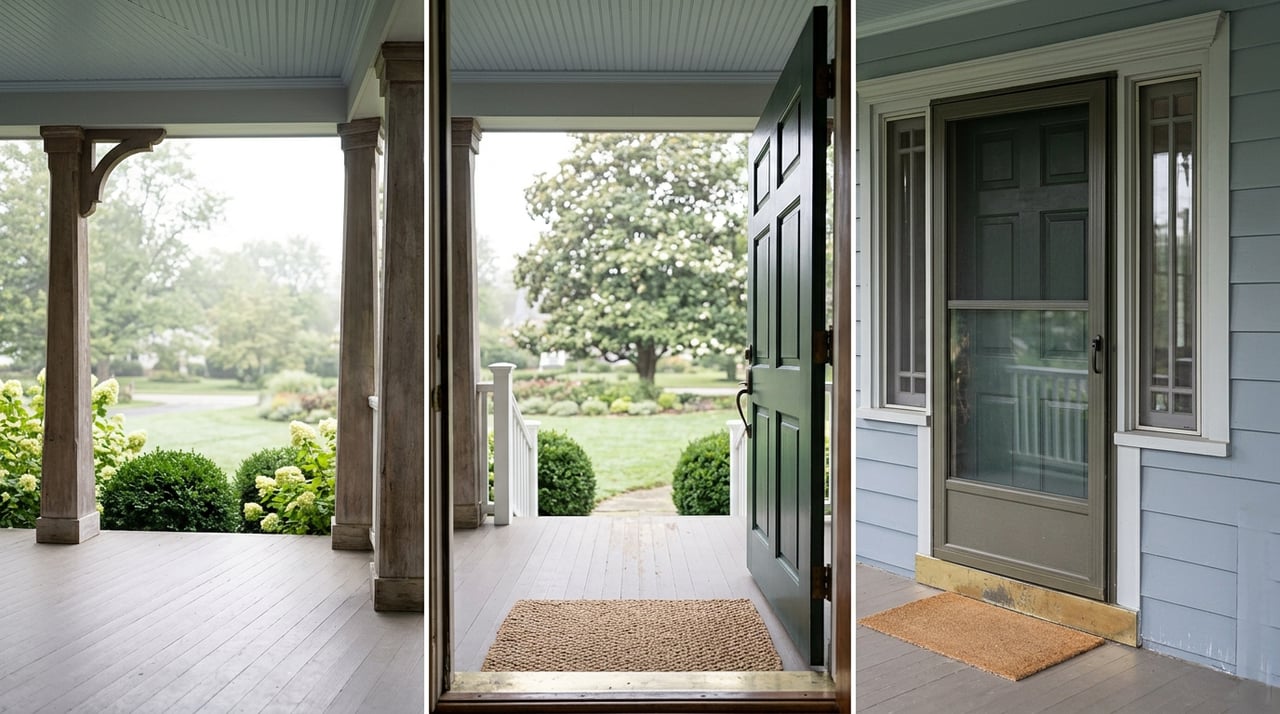
Red Bank's Historic Districts Don't Exempt the New House Next Door
A few years back, a house on Wallace Street in Red Bank was headed for a parking lot. The property at 26 Wallace Street, built in the 1870s, had been targeted for demolition to make room for parking. The borough's Historic Preservation Commission stepped in and blocked it. The house survived, and a couple later bought it and began restoring it room by room.
That story reads like the version of historic preservation everyone expects: an old, distinctive house, a demolition threat, a commission that saves the day. It's a good story, and it's true. But it's also the version of the rule that misleads buyers the most, because it suggests the Historic Preservation Commission only cares about houses that look historic. Red Bank's own application language says otherwise: every structure inside a designated historic district, whether it's contributing, non-contributing, or brand new, has to apply to the commission before its exterior changes. The 1870s house on Wallace Street and a five-year-old renovation two doors down are subject to the same review if they sit inside the same boundary line.
That's the detail buyers and even some longtime owners miss, and it's worth understanding before you write an offer or plan a project inside Red Bank's two historic districts.
Red Bank has two locally designated historic districts: one covering the downtown commercial corridor along Broad Street, and one covering the Washington Street area, an early residential neighborhood of modest Victorian houses. If a property sits inside either boundary, any exterior work needs a Certificate of Appropriateness from the Historic Preservation Commission before it happens. That includes renovations, new construction, demolition, fences, and signage. It applies to the age of the building, not the era it looks like.
What isn't reviewed is narrower than most people assume:
The commission itself has seven regular members and two alternates, appointed by the mayor, and it takes four affirmative votes to approve an application. If the commission approves your project, that isn't necessarily the end of it. You may still need separate sign-off from the borough's planning or zoning office depending on what you're building.
The commercial character on Broad Street and the residential character on Washington Street aren't treated identically, and the borough's guidelines make that explicit.
| Broad Street Historic District | Washington Street Historic District | |
|---|---|---|
| Character | Downtown commercial corridor | Early residential neighborhood |
| Architectural feel | Mixed commercial storefronts | Modest Victorian houses |
| Typical review focus | Storefronts, signage, facade treatments | Windows, roofs, additions, materials |
Knowing which district a property sits in, and which set of expectations applies, matters more than knowing the general fact that Red Bank has historic districts at all. A storefront renovation on Broad Street and a rear addition on a Washington Street house go through the same commission, but they're evaluated against different context.
In the summer of 2024, the commission considered adding a third district. A report catalogued 17 of the 22 properties on Irving Place, a quiet street between Broad Street and Maple Avenue, as having enough historic value to warrant designation. The response from residents was immediate and mostly negative. Nineteen of the 22 homeowners on the list signed a petition against it.
At the commission's August 2024 meeting, one Irving Place resident summed up the objection simply:
"It feels like losing control of our property."
Faced with that level of pushback, the commission tabled the Irving Place proposal outright and folded it into a borough-wide review of historic resources instead of designating the street on its own. The commission's attorney, Michele Donato, told residents the street wasn't going to be singled out going forward, and that any future designation would come out of a comprehensive, town-wide process rather than a street-by-street nomination.
The lesson for a buyer isn't that Red Bank is expanding its historic districts aggressively. It's the opposite: designation here isn't automatic, it goes through a public process, and residents have real influence over whether it happens. If you're looking at a property near Broad Street, Maple Avenue, or the existing district boundaries, it's worth asking whether any designation review is active for that block before you assume the current rules are permanent.
For most of the past decade, the commission leaned on generic federal preservation standards to evaluate applications, the same criteria used everywhere from small towns to national landmarks. That changed through a year-long process the borough ran in 2025. The council contracted with Hoboken-based Architectural Heritage Consultants, capped at $60,000 and funded in part through the state's Preserve New Jersey Historic Preservation Fund, to write design guidelines specific to Red Bank rather than borrowed from a national template.
The drafting process ran from a May kickoff through survey work over the summer and a public presentation in the fall. An August 2025 council meeting reviewed a draft running more than 90 pages that distinguishes between contributing and non-contributing buildings and wrestles directly with modern materials, including debate over synthetic siding products designed to mimic wood. The guidelines generally discourage replacing existing vinyl with new vinyl, while leaving room for substitute materials that hold up better over time and still read as appropriate to the district.
That's a meaningful shift from where things stood just a year ago. Instead of commission members applying broad, borrowed standards case by case, applicants now have a document written for Red Bank's specific building stock, covering roofs, windows, storefronts, and additions in more concrete terms.
One frustration comes up repeatedly: the fear that historic review means paying far more for basic repairs. A Red Bank homeowner raised it bluntly in 2024, describing a hypothetical where regular gutters get rejected in favor of copper ones, pushing a project's cost up dramatically by her own account.
That kind of worst case isn't the intent of the new guidelines, which explicitly try to give owners flexibility on substitute materials rather than demanding a historic match at any price. But it's a real anxiety, and it's reasonable for a buyer to ask about it directly rather than assume either the best or worst outcome. If you're evaluating a home in either district and you already know you want to replace a roof, add a room, or swap out old windows, get a sense of the current guideline expectations for that specific type of work before you close, not after.
A few practical steps matter more here than in most Monmouth County transactions:
None of this should scare a buyer away from either district. Broad Street and Washington Street carry real character that a lot of buyers specifically want. It just means the due diligence looks a little different than it does on a standard resale a few blocks outside the boundary.
Does every old house in Red Bank fall under these rules? No. Only properties inside the Broad Street or Washington Street district boundaries, or individually designated historic sites, go through Certificate of Appropriateness review. An old house outside those boundaries isn't automatically regulated.
Do fences and signs really need approval? Yes. The borough's own application materials list fences, signage, additions, new construction, and demolition alongside renovations as work requiring review inside the districts.
If my home isn't on any historic list but sits inside the boundary, am I exempt? No. The rule applies to contributing, non-contributing, and new structures alike, as long as the property is within the district lines.
How long does a review take? It depends on scope. Some minor work can be handled administratively rather than waiting for the monthly commission meeting, but it's worth asking Red Bank's planning and zoning office directly once you know what kind of project you're planning.
If you're weighing a purchase in downtown Red Bank or along Washington Street, or you already own there and you're planning work that touches the outside of the house, it's worth a conversation before the plans are set rather than after. Gregg Casaburi works with buyers and owners across Red Bank and the surrounding Monmouth County towns, and can help you sort out what a specific address actually requires before you commit to a timeline or a budget. Let's Connect.

Work with a trusted real estate professional dedicated to personalized service, expert negotiation, and exceptional results from start to finish. Experience professional guidance backed by business expertise, market knowledge, and a client-first approach designed to maximize your results.