The "Freehold" Median Is Two Markets in One Number: What the Township Actually Costs in 2026
Type "Freehold NJ home prices" into any portal and you'll get a single median. In March 2026 that number was $489,000, up 15.1% year over year. In June 2026 the median list price sat at $599,000 at roughly $333 per square foot with a median 25 days on market. Both figures are accurate. Neither one describes the market a buyer is actually shopping when they say they want to be in Freehold Township.
The reason is simple, and once you see it, the rest of the Freehold conversation looks different. Freehold Borough and Freehold Township are two separate municipalities with different tax rates, different school district assignments, and very different housing stock. The Borough is a walkable 2.3-square-mile core built mostly between 1880 and 1960. The Township surrounds it and holds nearly all of the luxury tier. The portals blend the two into one median, and the blended number understates what a detached single-family home in the Township actually trades for.
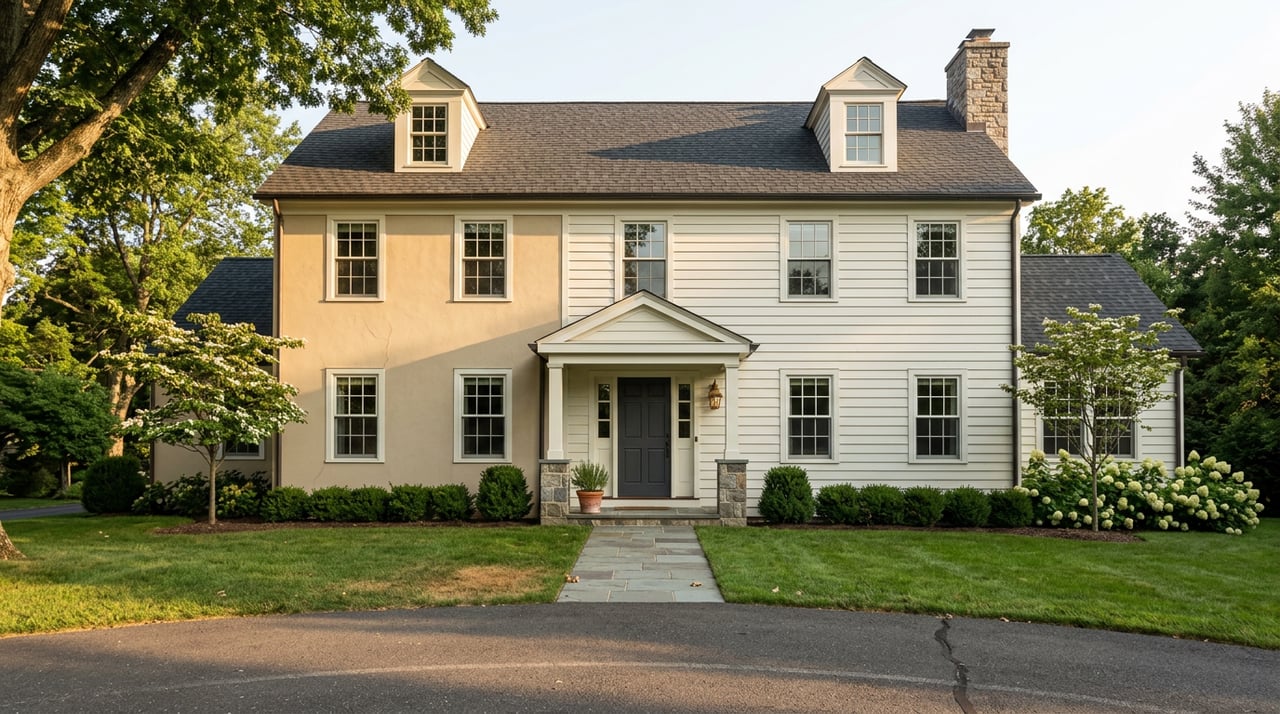
The spread between the two headline data points tells the story. The median sale price in March 2026 came in at $489,000. The average home value, measured by a separate index, was $631,016. That $142,000 gap is not a data error. It reflects Borough condominiums and older attached homes pulling the median down while Township estates pull the average up. When a portal shows you the median, you are looking at the Borough's pull on the number. When your buyer's agent walks you into a four-bedroom colonial on a two-thirds-acre lot off Stonehurst Boulevard, you are shopping the Township's pull.
For a buyer relocating from outside Monmouth County, the practical takeaway is that the search-bar median is a starting point for the wrong conversation. The relevant question is which submarket inside Freehold Township you are actually competing in, because entry, mid, and upper tiers behave differently on days on market, offer counts, and appraisal risk.
The Township tiers, based on transactions and current listings through mid-2026, look roughly like this:
| Township tier | Typical range | What it buys |
|---|---|---|
| Entry detached | $550,000 – $650,000 | Modest single-family, older systems, smaller lot, may need updates |
| Core mid-tier | $650,000 – $900,000 | Four-bedroom colonial, reasonable lot, updated kitchen or baths |
| Upper mid | $900,000 – $1.2M | Larger colonials, premium subdivisions, newer construction or full renovation |
| Luxury | $1.2M+ | Estates concentrated along Polo Club Drive, Freehold Englishtown Road, Militia Hill Road |
Gated communities like Raintree function almost as their own submarket. A detached two-bed inside Raintree with resort amenities is a different asset than a similar-sized ranch on an unaffiliated street, and it prices accordingly. Condominium and townhome inventory in the Township, concentrated in complexes like Poets Corner, Briarwood, and Oak Knoll, sits at a median list around $443,000 with about 26 days on market. That is where a first-time buyer who "wants Freehold Township schools" often lands, and it is a different transaction from a detached purchase in every meaningful respect: HOA underwriting, lender overlays on the association's finances, and reserve study review all enter the process.
Freehold as a whole is moving quickly at every tier. The median sale-to-list ratio is 1.000, meaning the typical home sells at exactly asking, and 45.2% of transactions close above list. Homes are entering pending status within 16 to 22 days on the Prodigy read and around 10 days on Zillow's ZHVI measure. Sellers who price correctly and present a well-maintained asset are not waiting for a second weekend of showings.
Freehold Township runs annual reassessments, which is unusual and, for buyers, generally a positive. It means the Township's coefficient of dispersion, the standard measure of how uniformly properties are assessed relative to sale prices, has been trending down. The 2025 COD was 7.75, the lowest among any New Jersey municipality with more than 6,500 properties and the fourth lowest county-wide. In plain terms, assessments track sale prices tightly, which reduces the odds of a surprise reassessment gap after closing.
That's the good news. The 2026 news that matters more is on the levy side.
Freehold Regional High School District's total levy is projected to increase by up to 10% for 2026, driven by ongoing reductions in state aid. FRHSD apportions its levy across Colts Neck, Englishtown, Farmingdale, Freehold Borough, Freehold Township, Howell, and Manalapan based on Equalized Values.
Two things follow from that. First, the FRHSD portion of a Freehold Township tax bill is likely to rise even before the municipal or county lines move. Second, because apportionment is based on Equalized Values, towns whose property values are appreciating faster than their neighbors carry a proportionally larger share of the regional bill. Freehold Township's net valuation is expected to increase about 4% in 2026, with roughly $436 million added to the ratable base, partially from new construction and partially from market appreciation. Buyers writing offers this summer should be modeling next August's tax bill against a higher FRHSD component, not the number printed on the current MLS sheet.
The mechanics of when that shows up are worth understanding. Township tax quarters are due February 1, May 1, August 1, and November 1, with a ten-day grace period. Reassessment postcards go out in the winter, and the third-quarter bill is where the new year's rate typically hits in full. A buyer closing in the fall of 2026 who budgeted from the first-half bill will feel the levy shift in their first full year of ownership.
The practical implications for a Township buyer split three ways. If you are shopping the entry detached tier between $550,000 and $650,000, you are competing against move-up buyers from the Borough and from Marlboro who are also priced out of Colts Neck and Holmdel. That is the tightest tier in the market, and the sale-to-list statistic hides how much of the "at asking" outcome is being driven by pre-listing negotiation and inspection concessions rather than headline price.
If you are shopping the mid-tier between $650,000 and $900,000, the Township's annual reassessment cadence works in your favor at underwriting. Your appraiser is working from recent, uniformly assessed comps, which reduces the odds of a low appraisal derailing the deal. The offer strategy here is less about the top-line number and more about credibility of financing and speed to close.
If you are in the luxury tier, the corridor addresses along Polo Club Drive and Militia Hill Road are their own comp set, and the blended Freehold median has effectively no relevance to your pricing. The negotiation is about specific features, lot, and school district assignment, not about the market temperature suggested by portal aggregates.
Yes. Rentals sit inside the same tax and school district architecture as sales. If your medium-term plan is to buy in the Township, renting in the Borough gives you a different school assignment and a different tax exposure than renting in the Township, which can matter if you have children entering school during the rental period.
The FRHSD portion is projected to rise by up to 10%. Whether your total bill rises by that full amount depends on how your individual reassessment moves relative to the Township average of about 4%. Properties reassessed above the Township baseline pay a larger proportionate share of the total levy. Properties reassessed below the baseline pay a smaller share. Ask your agent to pull the property record card and prior-year assessment history before you write the offer.
For a data-driven buyer, it is a real advantage. Annual reassessments compress the gap between assessed and market value, which reduces the risk of buying at a price that generates an oversized tax bill in year two. It also reduces the odds of a successful appeal by a neighbor shifting more of the levy onto your parcel. It is not a headline reason to choose the Township, but it is a quiet one.
If you're weighing a purchase or a sale inside Freehold Township this year, the details that move the outcome sit below the portal median: which tier you're in, how the reassessment lands on your specific parcel, and how the FRHSD levy shift affects your first full year of ownership. Gregg Casaburi works through those numbers with clients before the offer goes in, not after. Let's connect.
Work with a trusted real estate professional dedicated to personalized service, expert negotiation, and exceptional results from start to finish. Experience professional guidance backed by business expertise, market knowledge, and a client-first approach designed to maximize your results.